Thursday, June 28, 2012

Douchebitch of the Day

...and today on the wall of shame, we're featuring THIS lady!


She's our douchebitch of the day for giving away her twenty-eight year old gelding free on Craigslist. That's eighty in human years. She's owned him for years and years. This old guy packed her ass around the country, doing tricks and parades and hunting trips, etc. And what's his reward for years of service? Getting dumped on the internet for any idiot or kill buyer to take. This lady's excuse is that she doesn't have the money to take care of him any more.

You can see the original ad here, but in case it's gone by the time you read this post, here's a screenshot. Click it to enlarge:


Hey, I get it. The job market is rough, the economy is down, horses are expensive and she probably lost a lot in the divorce, etc etc. But you know what? Euthanasia only costs a few hundred dollars.

If you "can't" come up with a few Bennies to give a peaceful end to your senior citizen horse, who has given you years of service, you'd better be fucking homeless. Nothing, and I do mean nothing pisses me off like someone who has a nice cell phone, blond highlights and a credit card claiming that their "only" option is to abandon their old horse to the highest bidder or first comer. I hope that when people like this become old, they are shoved into the wilderness by their families and left to starve to death. "Sorry grandma, we just can't afford to keep your ass around anymore. Thanks for the memories!"


Some people whine, "Oh, but putting an animal down is soooooooo hard!" Yes, yes it is. I've done it, and cried for days. It hurts. It sucks. But you don't get to adopt a horse or a dog or even a fucking hamster and say to yourself, "I'm only going to be around for the good parts!" No. When you accept responsibility for another life, you accept responsibility for all of it. Not just the happy fun parts, but the sick days, the getting-old stuff and even the dying parts. If you're not prepared for that, don't get an animal. Period.

Other people whine, "But euthanasia and disposal are soooooooooo expensive!" Yup. And yet you bought the horse, and presumably spend lots of money on feed and tack and care. So what's changed? Oh, that's right, you don't get anything out of this deal. When you were spending money before, you got to ride your horsey and show off and take pretty pictures, yay! But euthanasia only benefits the horse by giving it a peaceful end. That's no fun for you. Cry me a fucking river, then drown yourself in it you selfish bitch. If you can budget for board or hay or sparkly pink tack, you can damn well set aside some money for death, the only thing on this planet that's totally inevitable, unsurprising and easily planned-for.

Oh but wait, he's twenty-eight, he might still have a few good years left in him! Uh huh. Do you know of any 80 year old people that would like to be suddenly uprooted from their familiar surroundings, taken away from everyone they know, and delivered into the hands of a total stranger? I don't care if the new caretaker is Mother Theresa herself, that's not okay. And chances are, the new owner/caretaker won't be saintly. Newsflash: putting an old horse on the internet for free is like shoving a pretty sixteen-year-old girl into a country bar in West Virginia. There's about a 0.01% chance they're going to go home with someone of quality.


I got so pissed off by this that I took a deep, deep breath and did two things I normally never do:
1) I contacted this lady personally.
2) I begged.

Here's the email I sent her:


Hello, I saw your ad on Craigslist about your older gelding. I am hoping to persuade you to do the best thing for your wonderful old horse.

He's clearly a talented, handsome guy who has given you many years of work and companionship. At twenty eight, he's 80 years old in human years. He deserves a peaceful end, in a familiar place, with the people and animals he knows.

Please don't give him away to a stranger on the internet. He could easily wind up in the hands of an abuser, a slaughter-buyer or simply someone who doesn't know how to properly care for any horse, much less an aging horse. This DOES happen OFTEN. Only last year, a man in West Virginia was found guilty of torturing to death 29 dogs he'd gotten for free from Craigslist. You can read the article here. Over several years, Kelsey Lefever of Pennsylvania took in 120 horses that she'd promised to find good homes for, and instead sent them to slaughter, pocketing the money. You can read that article here. In both cases, these people totally fooled owners into thinking they were good people who would provide good homes.

Euthanasia is a quick, painless, peaceful end. It may be hard for you to deal with, but it's the right thing to do for your horse.
I know that when I am 80, I want to die peaceful with my family around me, not in a strange place with strange people.

Euthanasia costs about $200. If your horse has given you at least $200 worth of work, entertainment and love, it's worth it, isn't it? A vet may even give you a discount if you explain your financial circumstances. Even a cheap bullet to the head would be a better end. If you absolutely don't have the courage or the money to euthanize your old friend, there are other options. A humane society like or a horse rescue like Midwest Horse Welfare or Saint Francis Horse Rescue and Retirement may take him in. A therapeutic riding program might accept him. If you have no other option than dumping your gelding on Craigslist, at the very very least, you could charge a small adoption fee and ask for vet references from a potential adopter. You can also look them up on Google and CCAP to try to find out if they are a decent person or not.

 Please don't give your old horse away free on the internet.

Tuesday, June 26, 2012

Answers for Conformation Quiz: Friesian Sport Horses

You're getting the answers to the conformation quiz even later than I hoped. Sorry. The horse abuse investigation I'm working on has suddenly turned into a much much bigger project, and I've been forced to put things on hold while waiting for HSUS backup.

Anyway, remember that conformation is subjective, so there's not going to be a 100% perfect answer. I've studied horse conformation since high school, making it to State in the FFA's Horse Judging competition my sophomore year, and I've never stopped learning. All that disclaimer stuff means that while I believe I'm good enough at judging conformation to post blogs like this, I don't tout myself as some sort of all-knowing genius guru. If you disagree with my answers, DO post why you thought differently in the comments below.

Wow, that was a lot of babble. Aaaand here we go, the answer to the conformation quiz!

1. Rank the horses in order from best to worst.
Answer:  A, B, C, D 


This was a little tough, because A or B could have come in second, and C or D could have come in last. Both sets of them have roughly equal faults. Both A and B are slightly downhill. A is slightly tied in at the knee and B is slightly over at the knee, etc. In the end, I put A first for two reasons. First, because B is slightly long in the back, a big no-no in my book for sport horses. Secondly, because of A's shoulder. Both A and B have a slightly more upright shoulder, which would help them get their knees up in eventing or show jumping. However, while horse A is the leggy, lanky type better for show jumping, horse B is not a jumper-type at all; I would prefer to see him with a more laid-back shoulder. That kind of shoulder would match the heavier, more muscled body suited to reining. So A won out because his parts fit together better... though if it came down to pure personal preference, I'd still choose B. I'm a sucker for cow ponies.

Both C and D have a long list of faults, but horse D's parts fit together the worst, and so earned last place. Horse C is is tucked-up, has a steeper croup than I'd like, has a weak loin coupling, is downhill and has a slightly long back. She's going to have a terrible time being collected. However, at least she looks like a pretty pretty princess horse, and all of her parts match her sleek physique, unlike Horse D. Horse D is actually a mare. Her Frankenstein-like appearance combines a ewe neck, short back, downhill build, short legs, camped-under rear, steep croup, short neck, ugly head and probably upright pasterns. This is a perfect example of "trendy breed" syndrome, wherein anything that's part Freisian gets bred to anything else, regardless of conformation. Horse D is 3/4 Freisian, 1/4 Morgan, and was adopted from Midwest Horse Welfare for $600. She rides and drives and only occasionally lurches around town scaring villagers.

 If you have a strong personal preference for stock-type horses, you may have answered B, A, D, C. If that's the case, you're not terribly wrong, just slightly biased like I am.

2. Which horse is over at the knee?
 Answer: B. Slightly.
 Being "over at the knee" or "buck kneed" means that the knee joint is more forward than the fetlock joint. This condition is usually caused by work-related strain or injury, and is often seen on Thoroughbreds. Look at the mare below to see what a serious case looks like!


3. Which horse is most "herring gutted," or "tucked up?"
Answer: C.
"Herring gutted" or "tucked up" means that the horse's chest and abdomen slant upwards sharply towards the rear end. All horses' abdomens slant upwards in the last third, but with herring-gutted horses, this narrowness begins in the first 2/3 of the barrel. This is a fault, because it limits the size of the heart and lungs in the horse. This fault is also sometimes called "wasp waisted." Horse C isn't nearly as tucked up as some horses, however. Thoroughbreds and Akhal-tekes often suffer from this fault. I guess it's a trade-off for aerodynamic-ness? Yuck.

4. Which horse has the least steep croup?
 Answer: B.
Oh yeah, I like big butts and I cannot lie! A medium or flat croup give the haunches more power and a longer, flatter stride, great for endurance riding, jumping and dressage. A steeper croup can be advantageous in a few cases, however: reining, where a horse's butt needs to be "under itself" more for sharp turns; big gaited movements as in Tennesse Walkers; and for very heavy draft work, where a steeper angle provides leverage against a load. Unfortunately, I see many Friesians and Friesian crosses these days with sharp croups. A horse with a steep croup is sometimes called "goose-rumped." Arabians often have flat croups. The croup is measured from the top point of the hip to the point of the buttocks. A horse can have a big round butt but still have a steep croup.


5. Which horse's legs are too short in proportion to its body?
Answer: D. 

A poor photograph hides this horse's pasterns in the grass, but regardless, it looks more like a Dachshund than a sport horse.

6. Which horse appears to be most "camped out behind?"
Answer: A.


Being "camped out" means that the horse's legs aren't "under" its rump, decreasing the animal's ability to collect and power forward from the rear.

This was another tough one, because neither A nor B (the bays) were standing square, and C was slightly hard to see because of all that shiny tail. (Sorry, I got the order of the above pictures wrong.) A, here shown in the second picture, and B, shown here in the last picture, aren't as camped out as their pictures show. Both are holding their left rear legs slightly back from normal position, A even moreso than B. When a horse does this, he usually holds the other rear leg slightly forward of normal position to compensate. B is not only doing this, he's also positioned at an angle. Despite all of the weirdness, I think it's fairly clear that A's hock joints are going to line up a bit behind his butt when he's square. B may also be slightly camped out, and truthfully it's hard to get a clear answer from this photo, so no points off if you answered B.

Note: this is why you need to take GOOD conformation photos when asking others to judge your horse, or putting your horse up for sale.

7. Which horse is best suited to reining?
Answer: B.

Compared to the others, B has that butt that just won't quit, and that's essential for a reining horse. In reining, a horse needs to sprint, cut around corners, spin, spring forward and put the breaks on. Most of those maneuvers come from the powerful butt engine, with the front end acting largely as an impact absorber and occasional pivot. Speaking of the front end, B also has good bone and medium-to-short front cannons, factors which will help keep her sound. She also has the advantage of being built closer to the ground, meaning she won't have to work as hard to turn and pivot her body. I wish she had a slightly more laid-back shoulder and wasn't downhill, but she's clearly the reiner here.
8. Which horse is best suited to show jumping? 
Answer: A.

A on the other hand has a more "leggy" build, very helpful in clearing fences. His more upright shoulder will help him get his knees up to clear a bar, the open angle where his scapula meets his humerus will give him lots of scope, and his more streamlined, leaner frame will be easier to propel across obstacles. I do wish he had slightly more butt and loin for propulsion. I'm also concerned about those legs. Earlier, we discussed how A looks a bit over at the knee. I believe this is caused by his being tied in at the knee and also have slightly less bone than I'd like to see. The combined strain is already taking its toll. If this horse isn't wearing boots, he should be.

P.S. there's a nice little blog entry (not mine) on dressage vs show jumper conformation here.
 
9. Which horse is "ewe necked?"
Answer: D


A "ewe" neck (pronounced "you neck") is one where the bottom of the neck is convex while the top of the neck is concave. This fault is also called an "upside-down neck." What many people don't know is that, while a ewe neck is partially a genetic fault, it can also be caused by incorrect riding or improved with correct exercise. Ewe necks can develop when a horse works in a hollow frame, bracing against the bit. As a result, you're more likely to see a gaited horse or a horse in an English discipline develop a ewe neck, because the rider is so much more "on the bit" than in a western discipline. However, you also often see ewe necks on western horses ridden in tie-downs, because they brace against that device instead.


A ewe, of course, is a female sheep...and they do have ewe necks.

10. Which horse appears to be "tied in at the knee?" 
Answer: A.

To be "tied in at the knee" means that the diameter of the tendon below the knee joint is too narrow. The cannon below the knee should be about the same thickness as the bone just above the knee. When a horse is tied in at the knee, there is increased strain on the knee and tendon, resulting in weaker athletic ability, bowed tendons, knee strains and lack of forward drive.

Horse A isn't too bad, but if his chosen career is jumping, where his full weight will land on his tendons every time he clears a jump, I foresee a little trouble in the future.
 

Friday, June 22, 2012

Conformation Quiz: Freisian Sport Horses

Study the horses below. Then answer the quiz questions to the best of your ability. Remember to take into consideration the breed type. Although not all are the same crosses, Friesian Sport Horses are, by definition, supposed to be sport horses, heavier-boned (but elegant and athletic) horses that could excel in dressage, show jumping, reining, eventing and driving. I will post the answers in a day (or two or three-- I'm in the middle of investigating a major abuse case). Please DO post your answers in the comments below, if you can-- let's get a good discussion started.

Conformation Quiz

1. Rank the horses in order from best to worst. State why you ranked them as you did.
2. Which horse is over at the knee?
3. Which horse is most "herring gutted," or "tucked up?"
4. Which horse has the least steep croup?
5. Which horse's legs are too short in proportion to its body?
6. Which horse appears to be most "camped out behind?"
7. Which horse is best suited to reining?
8. Which horse is best suited to show jumping? 
9. Which horse is "ewe necked?"
10. Which horse appears to be "tied in at the knee?"


Thursday, June 21, 2012

Poisonous Pasture Plants Part 2


You might remember my last blog about poisonous pasture plants. It's time for Part 2, where I'll show you how this spring's nasty weeds have grown, and which newly grown ones you need to worry about. Again, I'll only be showing you a select few- northern/midwestern plants that directly affect you or your horses. Most of these photos were taken directly from my pasture, so you know exactly what they look like right now. For further reading, visit your local library or try these helpful weed-identifiers from CA and WI.

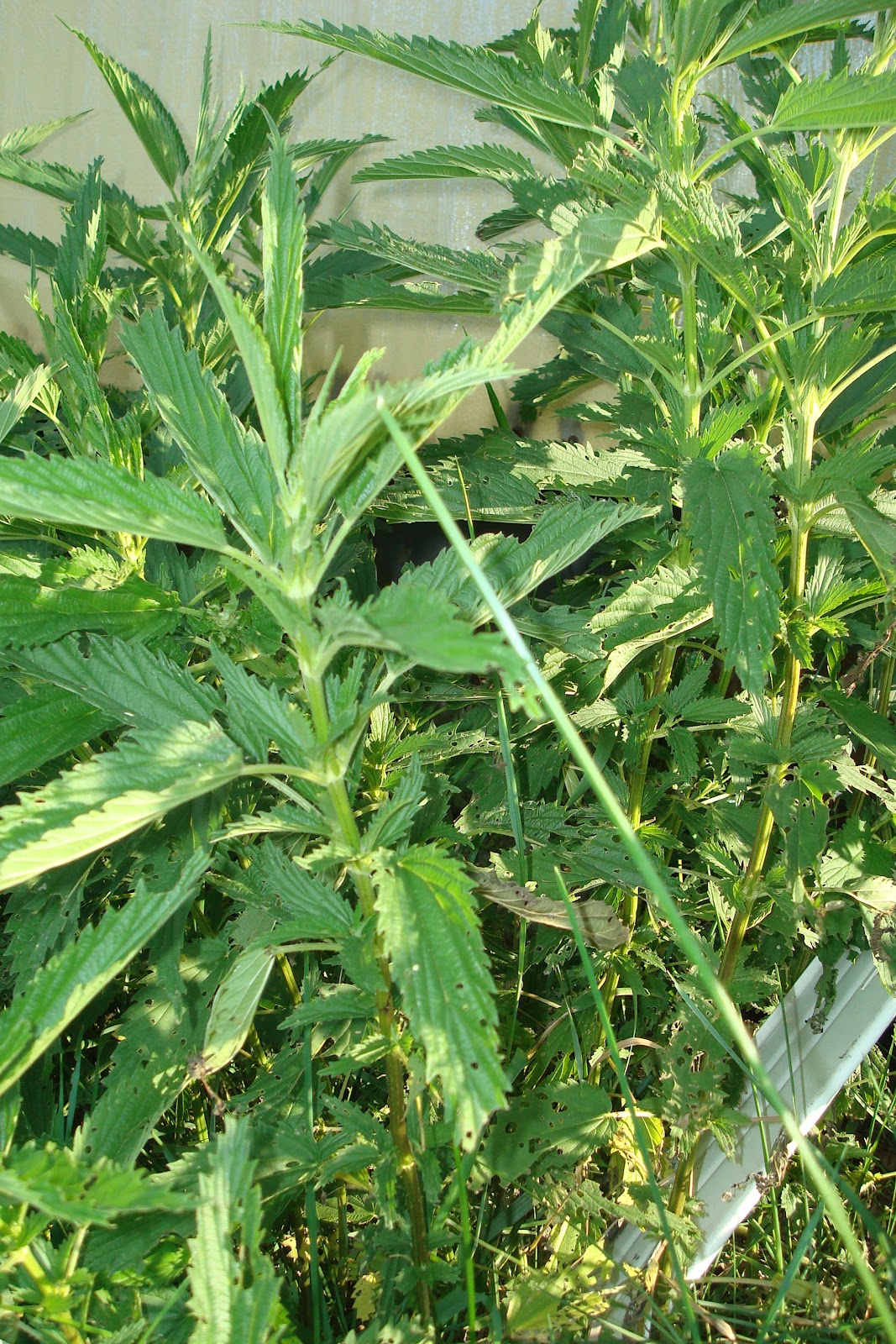
Nettles


They sting badly, leaving red itchy skin, but aren't poisonous. There are lots of kinds of nettles, but they all have darkish green leaves arranged in a "plus sign" shape, and the "toothy" edges of the leaves are spiky, not rounded. Evil, evil nettles! In the spring, they were sort of cute, and I even gave you a recipe for using the young plants in soups, etc. Now, however, the nettles are waist-high in places, and are more likely to cause skin rashes. Wear gloves when you're getting rid of them. If you come into contact with nettles, take an anti-histamine, soak your skin in cold water, then apply an anti-itch cream. Some horses are more affected by nettles than others-- better safe than sorry.


Wild Parsnip

WARNING: DANGEROUS! These weren't around much in spring, but now they're out in force. They look a lot like bigger, yellow versions of Queen Anne's Lace. Wild parsnip practices a horrific type of chemical warfare. Break any part of the stems, and the sap inside will react with the sunlight, causing burning, blistering and scarring on you OR your horse within 24 hours. Remove these with extreme caution by chopping them off at the root, below ground. Burning won't kill them. Chopping the stems often just spreads and sprays the sap onto you and the ground, and the plant grows back anyway.


If you or your horse is gets wild parsnip sap on you, IMMEDIATELY cover up the affected area and keep it covered for at least three days. The more the sap is exposed to daylight, the worse it's going to be. In a dark area, wash the skin with soap and water to try to remove as much sap as possible. From then on, there's not much you can do except live with the agony. Full recovery can take months. This is an excellent fact sheet, and has a lot more photographs.


Burdock

Annoying, but not poisonous (you can even eat the young leaves). This is the stuff that eventually spawns those awful prickly balls that stick to your horse, saddle blanket, dog, clothes, and everything else. They actually inspired the invention of velcro. At this point in the summer, the big, tough plants look like massive rhubarbs-- but they're not. They'll continue to grow upward and outward, until they span up to four feet across and four feet high. It's best to dig these out, but chopping them will work for a good long while. The fuzzy sticker balls haven't arrived just yet, but they well, oh they will. And if you haven't killed the burdock by then, you'll be faced with tangled manes and tails all fall.


Wild Grape

This crap isn't poisonous to horses or humans (in fact, it's a delicious, if tart, survival food) but it will absolutely wreck fences. The vines wrap around electric fences, grounding them and sometimes even dragging them downwards. Even wood fences can get buried if you don't control wild grape. Worse, wild grape looks a lot like Canada Moonseed, which is toxic to both humans and horses. Kill it! It's best to catch it early, before it becomes too vine-like; at that point, it's hardy enough to grow back fairly easily. Really old wild grape vines can be an inch or two thick, and will trip horses and strangle trees. When uprooted as seedlings, however, wild grape is easy to kill. Note the heart-shaped leaves with irregular "teeth." Vines start tough and reddish, then get brown and woody.


Hemlock (Cow's Bane)

This very deadly plant is luckily not very common in pastures, but you need to watch out for it, especially if you have any water or swampy areas on your land. Any part of hemlock can be deadly to livestock or people. It should be flowering by this point. Confusingly, there are two types of Hemlock, and both resemble Queen Anne's Lace and Wild Parsnip. Time for example photos!


p.s. "Hemlock" Water Dropwort is probably the plant used in ritualistic elder poisonings and by the Joker to produce the strange death-grins. Not joking. Check it out.


                            Click Photo to Enlarge


There are many more plants, but that's probably enough stuff to fit into your brain for now. Of course, if you're feeling super-studious, you can also check out Ragweed (giant and common) and Wild Raspberry (horrible thorny, snaggy, tripping vines-- also delicious).

Oh wait, I almost forgot to mention a couple of friendly plants!


                          Catnip                                                             Pineapple Weed


Looks a bit like a nettle, but has rounded "teeth"
and fuzzy leaves. Smells strongly when crushed.
Stands knee-high in summer. Great for cats!                     


I'll do a final Part 3 in the fall. Stay tuned to North Horse... I've got a Conformation Quiz in the works, and I'm currently investigating a cruelty/neglect case near Lena, WI.

Monday, June 18, 2012

Modern Civil War Horses

This weekend, I drove past this sign:


...and of course I had to follow it! How many times in life do you see a garage sale sign advertising time travel? I'm glad I did, because I got to meet some of the coolest people and horses ever.


This is Carl Holzschuh and his horse Hot Sauce. They're reenactors who re-create the civil war so that people like you and me can watch history live, so to speak. Carl is a real veteran as well as a pretend one, and he's been doing this since the 80s. He and his troop, the 1st Alabama Cavalry, came to Columbus, WI this weekend to help celebrate the Columbus Horse and Carriage Festival. Carl is from WI, as are most of his fellow soldiers, but they chose to portray the 1st Alabama because in real history these troops split apart and joined both the Union and Confederate ranks. That means that Carl and his friends can portray both Confederate and Union soldiers and still remain true to history. They appeared at the Midwest Horse Fair's exhibit "Horses of War" under both flags on two different days. Here are some of the incredible things I learned from Carl:

  • It takes 2-3 years for a horse to become well-trained enough to deal with the cannon fire, gun fire & cavalry charges.
  • It costs $5,000 - $7,000 to fully tack up a horse in authentic Civil War era gear.
  • A reenactor pays for everything out of his (or her) own pocket.
  • In the beginning of the Civil War, the Confederates had the advantage when it came to horses, because in the agricultural, aristocratic south, many new officers already had their own horses, and were good riders. The Union took 2-3 years to get horses and men trained well enough to match the South.
  • Cavalry horses were usually Morgans, Standardbreds, Tennesse Walkers and Thourougbreds. Quarter Horses hadn't really developed fully as a breed, and Mustangs were considered inferior mounts.
  • 3.5 million horses and mules died during the Civil War, 5-6 times the number of human casualties.
  • In Sherman's march to the sea alone, 270,000 horses and mules were used.
  • Horses were more often transportation to a battle rather than transportation in a battle. Other than in quick raids, soldiers usually left their horses behind battle lines, then dismounted to go fight. This made sense because loading and firing a gun was usually a two-handed process, the horses were very unreliable under cannon fire, and a man on a horse was a march larger target.
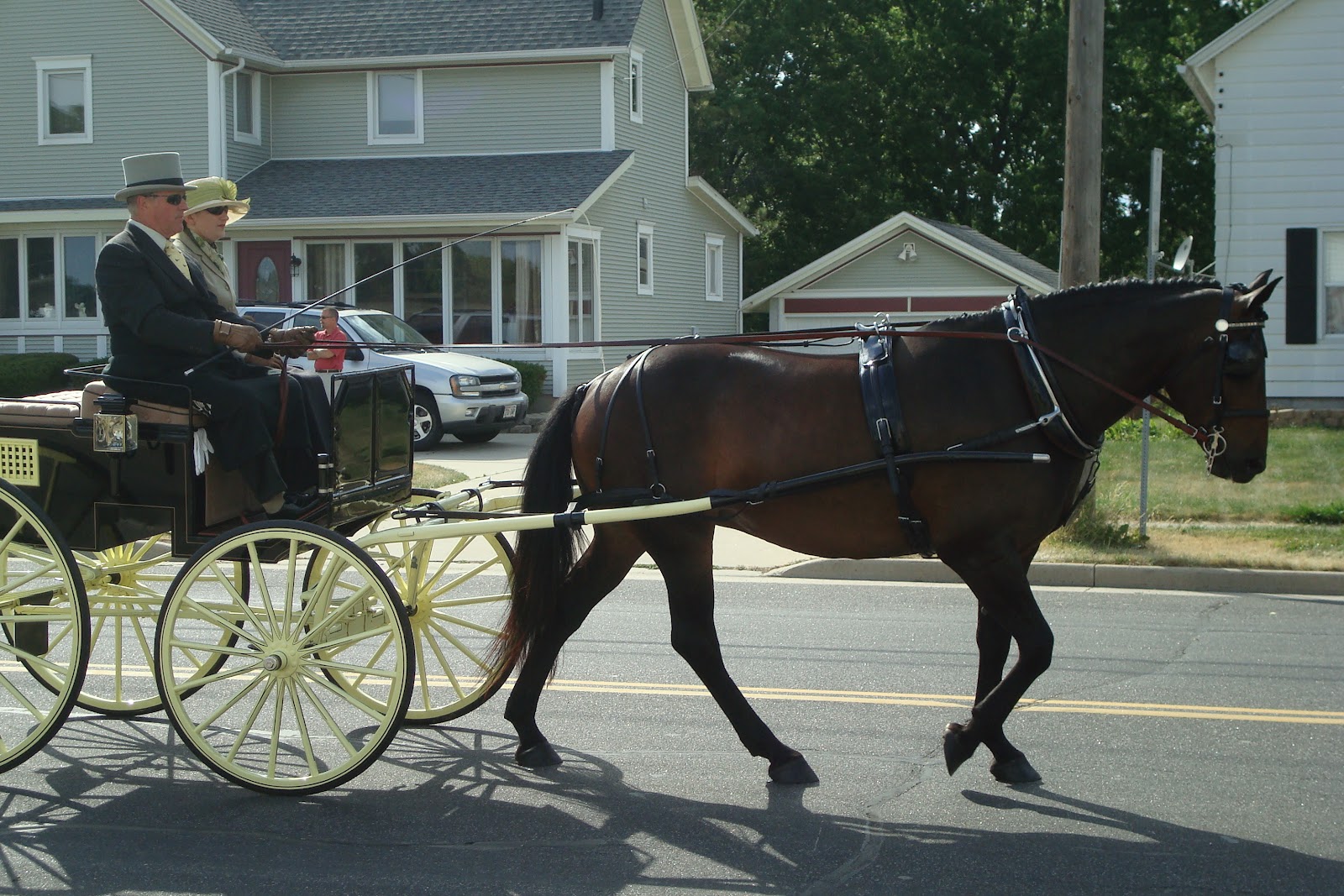
Here are some photos from the event, along with some hopefully enlightening captions:

Then-Wisconsin-Governor Lewis stands by to escort President Lincoln

Horses on a picket line, exactly as they would have been during the war.

This saddle is brand new, but made to exactly replicate an 1859 cavalry saddle.

This Akhal-Teke horse belongs to Buck Brannaman's brother, who was also at the event. Yay celebrities!

These guys actually did sleep in tiny canvas tents during the event!

The gorgeous black stallion Bethesda Horus, a supremely talented Morgan. I think I'm in love.

The Union Color Guard escort President Lincoln down Columbus's main street.


President Lincoln waved at me!! The gorgeous team here is rumored to be going to the Olympics.


ZOMG tiny pony is sooooooooo cute!

A final word on Carl and Hot Sauce. Carl is a very skilled and knowledgeable farrier, and I highly recommend him. He's based out of Sherwood, WI (close to Appleton) and his number is (920) 989-1877. Carl got Hot Sauce straight off the standardbred racing circuit, when he was pulled out due to a tendon injury. He would have been put down or sold to slaughter at only three years old. Carl took him in and fixed him up, and Hot Sauce is now 14 and a perfectly sound, wonderful mount. You can read more about Carl and his horsemanship skills in this article.

Saturday, June 16, 2012

Bad Broodmare Conformation

I don't think I've met anyone, anywhere in this horse world right now who believes that the horse market is doing well. Everyone seems to know that there are too many horses, too few buyers, and not enough cash or jobs in general out there. And yet some people still continue to blindly promote bad breeding. Here are a few broodmares that should never have been bred:


This poor creature is from Iowa, and is currently on the Madison, WI area Craigslist for $3,500. I swear to God, her rear legs seem to be shriveling up in pain. Those pasterns are so upright, I think they could actually be retractable-- they might just sort of slot up into her cannons like the legs on one of those pop-up canopy tents. And they match her ugly upright shoulder. But, uh, nice muscling I guess? Is that HYPP or a lot of workouts? I'm betting HYPP, because she has Impressive in her line twice. Nice of the sellers not to mention whether they've tested her, eh? Her compatriots on the ad aren't great either...


If you detached this mare's limbs and covered them with gravy, you'd have the world's biggest turkey legs. What's with all that meat on those thin legs?! It's like some horses are purposefully bred for the slaughter industry-- they go lame fast and then there's a LOT of meat there. I know this is sort of fashionable in the QH world right now, and not everyone will agree with me when I saw this is pretty terrible. But let me give you one last illustration of the problem. I've taken this photo and then cut out much of the "middle" legs, then put the "meat" directly on top of the lower legs. I did NOT change the proportions in any way. This shows you just how much weight is being put on such tiny surfaces, especially in front, where a horse carries most of its weight:


That's what we call a recipe for lameness. This otherwise pretty lady is from Iowa and is now (thankfully) too old to get in foal, but her owners in Neenah, WI, and her previous owners in Iowa apparently got a good number of foals out of her.

Our last stop on this tour of despair is Mosinee, WI, where a young lady named Kasandra is currently breeding and training. She looks to be roughly fifteen, but don't worry, she's already got herself TWO stallions to breed her mares to! One of them is a very crappy-looking cremello, and the other is an average-looking paint. Surprise surprise. But we're focusing on mares here...


This is Blanco, one of Kasandra's "best ridding horses." Yup, she's being ridden... at two and a half years old. She's not bred... yet.


...and finally, this is Ruby, Kasandra's first horse. Ruby has got a steep croup, weak hip, non-existent loin, tied-in-at-the-knee legs, and God knows what else. Of course Kasandra has bred her at least twice. On Ruby is Kasandra herself, with her infant daughter. Notice how no one is holding the reins? And neither mom or kid has a helmet? And this mare is totally unrestrained, in what looks to be a backyard? This mare isn't the only thing that shouldn't be breeding...

Ow Ow Ow Ow OW my brain is BLEEDING...

Friday, June 15, 2012

The Redneck Bridle: Instructions for Use

I'm a huge fan of the Snarkyrider/Fuglyblog blogs, and this post about the poor abused Throughbred in a twine bridle, combined with Snarkyrider's most recent contest, inspired me to create this educational poster:


Snarkyrider's contest is basically "Best / most creative picture of you or your horse with twine." The winner gets a free item from her store. If I win, I'm totally going for the bumper sticker. There's still time for YOU to enter too! Send a picture to snarkyriderblog@gmail.com.

I should explain that yes, the horse up there is mine; that's Mr. Strut, who gets a lot less press coverage than Annie. Don't worry, that "bridle" was only on his face just long enough for me to snap a picture. You can tell by the expression on his face that even he knows how stupid and scary this contraption is. Mr. Strut is a retired TWH, and though he can be a bit of a grump, he's a saint when it comes to shots, worming, and participating in ridiculous stuff like this. I bought that nasty noseband/shanks/chain combo from a garage sale specifically to prevent it from falling into the wrong hands, and I promise you, it will never actually be used, other than as a bad example.

Stay tuned: the next post is going to be a follow-up to the post, "Poisonous Pasture Plants and Hunger Games Herbology." I'll be showing you the later-summer pasture plants that affect you and your horse!