Friday, February 3, 2012

More Llama Drama

Since the failed rescue attempt this Monday, I've been searching for a way to catch the darn llama. Suggestions from others have included:

  • Hiring a roping cowboy and horse team to rope it and tie it
  • Hiring someone with working dogs to herd it
  • Trying to put some kind of sedative in the llama's food

Roping a llama only works if you rope a leg-- their skinny chicken necks are apparently too delicate to handle a lasso. And after you rope it using this much harder tactic, you then have a struggling llama to deal with. Dogs might work if we had some kind of corral-- but I doubt that even the best working dogs can forcefully herd an unwilling llama straight into a stock trailer. Finally, oral sedatives taste disgusting, unless they're so weak as to be practically useless-- so that was a no-go.

After playing phone tag with various vets across Wisconsin, I came round-about to a solution originally suggested by "Skyla" & crew: tranquilizer gun. (Well actually, they proposed that we might get the DNR to tranq the llama for free-- hah hah hah.) Anyway, I was referred to an older gentleman who earns substantial income acting as a sharpshooter, tranquilizing everything from donkeys to buffalo. However, he said that doing this is a tricky proposition, and he would only work with a certain vet.

Back on the phone, I eventually got ahold of this vet, who turned out to be Mike Edders of Lodi Veterinary. I love Lodi Vet (they take care of my horses). Mike said we probably wouldn't need a rifle; if he could get within 10-20 feet, he had a blowgun that would work. Blowgun?! Sweet! I set up a Saturday appointment immediately, asking him to vaccinate, deworm and check on the llama's wounds while it was sedated. Awesome-- not only could we catch the llama, it could have all the vet work done right then and there-- without having to wait weeks taming it first. After years of neglect, I'm sure the llama needs it ASAP. Mike estimated the cost would be $250-$350, depending on how long we were out there playing llama rodeo. It's a reasonable cost, though it hurts (my bank account is anemic, since my husband still isn't getting paid) but it's the right thing to do.


I called Skyla and left a message to inform her of the appointment, the cost, and asked to call up the farm boys and ask them to help pull the trailer out of the mud again. I also asked nicely whether she could chip in for the vet costs.

Skyla called back while I was at work and left me a message. She was shocked at the cost of the vet work and accused the vet of having "a heart of stone" and being greedy. I'm not sure, but she may have also accused me of inflating the costs in order to get more money from her to keep for myself. Here's a transcription of her message:

"Hi *NorthHorse* it's [Skyla] I got your message, my phone has been acting up... um, you said it was going to cost between $250 and $350... and yes I'd like to help out, but I'm confused... I thought our objective was to find someone who would do it 'pro bono,' for free, you know, with the heart of recovering this desperate animal that needs to be caretaked and new home and...has this guy got a heart of stone or something? Where he's just cutting you off a piece of his pie? I'm sure you've got good references from him...couldn't we just peck at his heart a little and get the cost down? I was hoping that since this was a rescue situation, desperate and humanitarian and stuff, he would, you know, get on board with that. I'm glad it's moving forward, but I'm a little confused."

Keep in mind that this same lady has been treating this "desperate animal" as a pet project to be taken up only after her lunch date with her daughter, walking her dog, etc etc etc. She's been delaying action for days, suggesting that moving the llama would be "traumatizing," and wanting to "make friends" with it before anything else. Originally, she even wanted to leave the llama "in the wild" since it was "fending so well for itself." Now all of a sudden it's a desperate situation?

I called Skyla back. She didn't answer, so I left another message. I very nicely explained that part of the cost was the costs of the drugs involved, which the vet couldn't change, and that while I agreed we would certainly ask the vet if he could knock a bit off the bill for charity's sake, vets have to make a living too. I asked her to please call the farmers and ask their permission about a Saturday appointment, and see if they would help me get the trailer out of the mud again.

Skyla called back while I was at work and left her shortest message ever: the answer was no. No, Saturday wouldn't work for the farmers, and Saturday wouldn't work for her either. Sorry, goodbye.

Hmmm....I called the farmers myself. Their names are Ryan and Jake, by the way; the same two young men that tried to help us catch the llama on Monday and got my truck unstuck the first time. Turns out, they're totally fine with the vet and I coming out Saturday. Ryan will be gone, but Jake is quite willing to hitch his tractor to the trailer and pull it out to the road for me.

Skyla lied in order to keep me from moving ahead with rescuing the llama. I think she wants to be in control of the situation.

Screw her then. I don't much care if Skyla's feelings are hurt. This is about the llama, not her. The sooner it receives proper food, water, shelter and vet care, the better. If I left things up to clueless-about-large-animals Skyla, that bimbo would be talking about spiritual healing in animals three months from now, while the llama dies of gangrene or something.

Though I am not going to call Skyla to tell her I'm moving ahead tomorrow, I am worried that she will show up anyway and cause a scene. She doesn't have any claim on the llama (it's my trailer, my vet, my farm, my money, and the farmers don't care) but I can see her getting upset at me/the vet/everyone in a crying hissy fit, or attempting to stop us, or following us back to my farm. Luckily, I've got backup; both Erin and Becky have agreed to help me again. What heroes! If anything does happen with Skyla, they may be able to help diffuse the situation. Or at least hold her down while the vet and I tranquilize her. (Just kidding.)

So that's it! We're on! I've taken vacation from work tomorrow, scraped the courtyard, gotten permission to borrow Dad's truck again, readied the gates and even got a lead on a nearby llama farmer for help and advice. In the morning, I'll be picking up some straw for bedding (the llama is going to have to stay locked in the barn until he's catchable) and maybe some feed to supplement the hay.

Becky's daughter is also coming along, and she says she's willing to take lots of pictures for me, so stay tuned for tomorrow's update!

P.S. Skyla has called me three times today. One of the things she wanted to tell me was that she thought she read that llamas don't like to poop where they haven't pooped before, so she filled a bag with llama poop and hung it in my trailer. Oooookaaaay....

Monday, January 30, 2012

Llama Fail


Apologies to any actual horsey people reading this blog (hah, nobody) but today is yet another llama-based blog. Today was Llama D-Day. I'd agreed to meet Skyla at the dairy farm where the neglected llama was roaming. The original plan was to simply to scope out the situation, and perhaps see if the llama could be bribed with food. (Well, Skyla's plan was to "stare at the llama" and "make friends" with it.) However, when I called her in the morning to coordinate, Skyla seemed especially gung-ho to get the llama moved. Not wanting to waste her sudden change of heart about "traumatizing" the animal, I jumped on the phone and started to try to round up helpers.

Dad wasn't feeling too well (or perhaps contracted a diplomatic virus to excuse his non-involvement), but I borrowed his truck and got over to the farm, where my friend Becky was waiting to help. After that, the entire rest of the afternoon was an almost unmitigated disaster.

First, the pasture gate was frozen to the ground and had to be chipped out, so that when Mr. Llama arrived, he could be separated from the horses.


I actually took this picture after the day was over, and then promptly dropped my cell phone into the muddy slush puddle.

Next, hitching the trailer to the truck took about seven frustrating tries because I'm an idiot, and because when you're in a hurry is the worst time to hurry. Luckily, the trip to the dairy farm itself was uneventful, and along the way I was even able to kidnap another friend, Erin, to help. She and Becky are truly good friends; it's not everyone that will agree to try and go rescue a wild llama on the spur of the moment, on a weekday, in the snow. Unfortunately, when we got there I immediately got the truck and trailer stuck in the mud, manure and snow-melt of the sloppy farm yard. Of course it wasn't paved, and was full of narrow, steep, rutted hillocks. By asking nicely I got a couple of the farmers to pull the truck out of the mud and re-position it in a better place. No doubt they thought our whole crew were idiots, and they looked very busy-- nevertheless, they did their best to help us. I don't really blame them for the llama's neglect. They appear to be hired hands or younger sons, working at a hard, filthy job on what looks to be a secondary farm. It's not their llama, not their job, not their concern. They may be guilty of simple indifference, but so am I-- how many times have I driven past this llama and not done anything about it?


The llama was out in the middle of a hay field. The dilapidated cow pasture it might once have been contained in doesn't really have fences. It does have some standing snags of barbed wire that constantly threatened to trip and injure us and the llama as it evaded us. The sheer size of the llama's area is discouraging. There must be well over 100 acres of barren fields that the llama can run around on. That made trying to corral it nearly impossible. The farm didn't have any area at all to even begin to contain the furry critter. Nevertheless, we tried.


Oh how we tried. We tried surrounding it and walking slowly, herding it up towards the trailer. We tried the same thing with a rope to try to form a moving fence. We tried running around it like a wolf pack, scaring it towards the trailer. We tried tempting it with food (this worked) and then lassoing it (this failed miserably). Erin almost got knocked down, I got a nasty rope burn, and the llama didn't seem to tire. When we finally realized that there was just no way we were going to get the llama to the trailer, we tried to bring the trailer to the llama. This involved a plunge down an questionable field drive and a hair-raising trip across the snowy ground, fishtailing all the way. Once there, we realized the llama was even further afield, and half our volunteers were ready to be done.

Llama rescuers unite! Sort of.


Becky and Erin were great sports, getting their frozen feet soaked, jogging through the brush and helping uncomplainingly despite the numerous setbacks. The other three...Well, I've blogged about how weird "Skyla" is before. She showed up with 60 feet of clothesline "rope" and a red plastic tub (to serve the llama hay in). In this picture, she's the one dressed like an eccentric nun in a rainstorm. She spent her time hobbling after us, making odd suggestions and mildly disparaging remarks about our efforts. Her friend in the front-middle of this picture showed up quite late and chatted with Skyla most of the time. Ken, hiding in the back of the group, played the role of "manager," offering a constant stream of useless advice based on his "expert" knowledge of llamas, apparently gained by knowing someone who had one once. Despite the farmers' offers of assistance with their tractors, Ken insisted on being the one to get my truck out of the sticky field. In my first wise moment of the entire day, I gave him the keys and walked away. Sometimes, you just have to let a man do his "man thing" and pretend not to notice how stupid he's being. It saves arguments and overall, time. For Ken, this meant him putting hay under the rear wheels of the front-wheel drive truck to serve as traction. Though he did finally get the truck unstuck, he left me plenty of time to snap pictures. We left the trailer behind, open and full of hay, in the unlikely event that the llama might decide to go in on its own, or at least become used to its presence. At the very very least, there is finally some food available. Besides which, if I had demanded to bring it home, I'm sure Ken would have insisted on helping.


The worst part of the failed chase was knowing that although the llama was feisty enough to run away from us, it's clearly suffering. We found spatters and drops of blood in many places, and Erin mentioned the llama's deformed, injured-looking face without any influence on my part. Clearly, it's not just me that thinks his head is messed up.


We're not giving up. We are, however, looking at a possible solution that I had at first ridiculed: a tranquilizer gun. Yes, apparently vets do have these. The question is, how expensive is it going to be to hire a vet to traq a llama? Will that even work? Why do I have to be the kind of person that worries about a goddamn wild-ass llama in the first place? These questions and more may be resolved by next Monday.


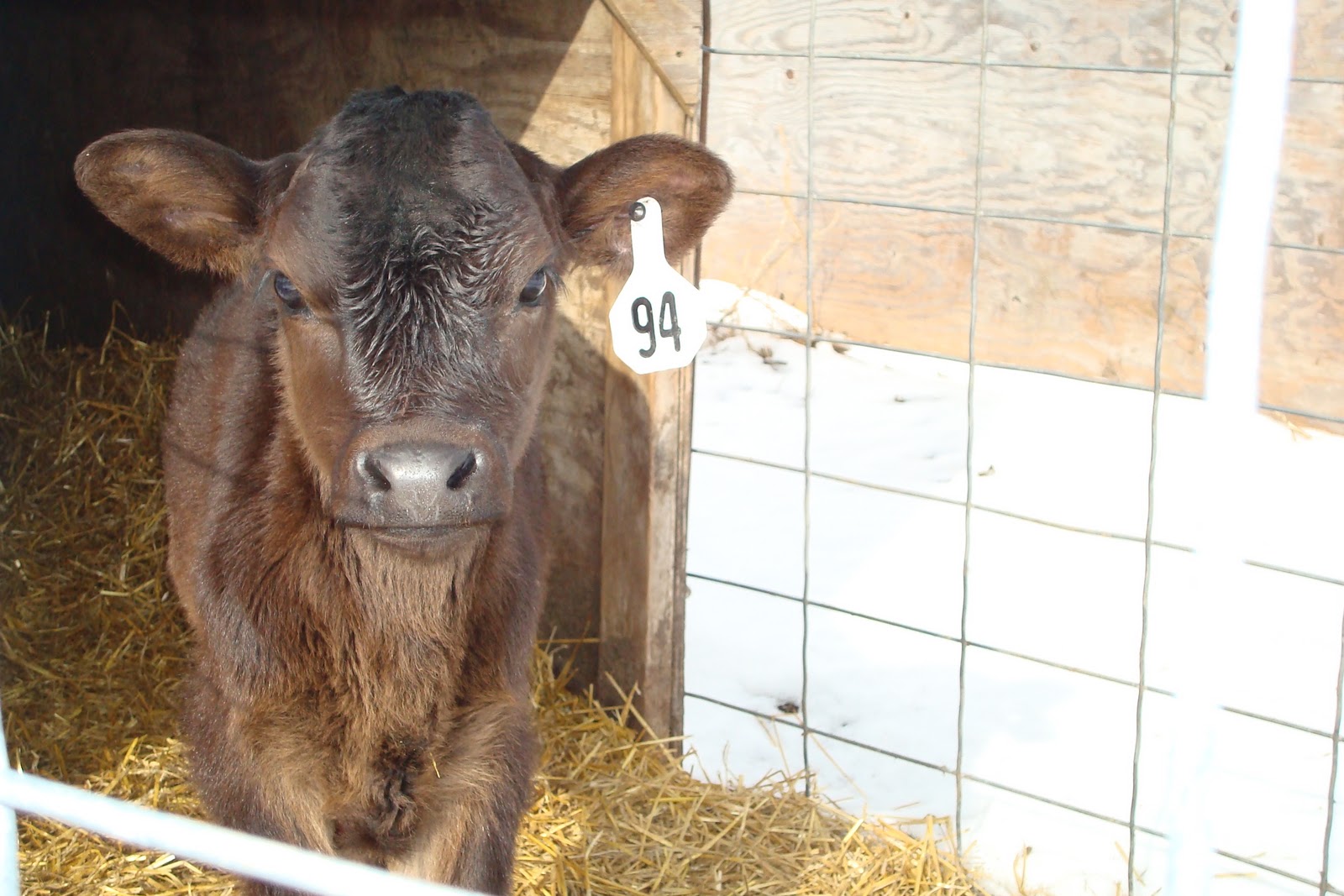
Aside from "Skyla's" numerous unintentionally funny statements and the dedication of my friends, the only highlight of today was seeing the baby calves. Dairy cows are weird-headed, slobbering, stinky monsters. Dairy calves are probably the cutest things on the entire planet. *sigh* I really need to work pasture-fed organic meat and dairy into my budget.

Sunday, January 29, 2012

Llama Update

I was all set to go to the llama's farm after work and talk to the farmer myself, when I got a message from Skyla. She wanted to talk to me about the llama. It seems she's had a change of heart: she does want to move the llama after all. Well, sort of.
She still doesn't want to traumatize it, so her plan, basically, is to go out and make friends with the llama until it trusts her enough to follow her into a trailer. *massive eyeroll* Apparently, she's willing to let me help with this... some day. She's in no hurry to do something for the llama-- when I told her I could visit immediately after work that very day, or any time Sunday, or any time Monday, she claimed tiredness, a lunch date with her daughter, the desire to go to a log cabin expo, and the need to walk her dog. I reminded her that the llama was out there in the cold, with no food, shelter or water. She responded by saying that the llama had survived this long, and well, she was worried too but there was nothing she could do and she would just have to "give it to the Lord." We finally decided on late Monday morning. She cautioned me very strongly not to go out there without her.

I am beyond frustrated that this lady wants to help the llama-- but only on her terms, after her own fun is done. "Give it to the Lord" is a lazy, self-serving justification for not getting off of her ass sooner. It's sort of like saying, "Well, I am worried about those starving children in Africa, but I just spent all my extra money on a new convertible, so I'll just have to give it to the Lord."

I'm willing to play along until this Monday. After all, I don't know these farmers personally, and I don't want to jeopardize a chance to save the llama by offending Skyla, and thus perhaps the farmers themselves. I don't yet know how close they are. Monday will give me a chance to meet the farmers myself, scope out what the situation would be for getting a trailer in there, and estimate how hard it's going to be to catch the darn llama anyway. With any luck, and a lot of help from Dad, I can organize a rescue that very afternoon-- whether or not Skyla thinks it will be "traumatic" or not.

The most traumatic thing happening here is that the llama is still out there, hungry and cold.

More updates coming soon.

Thursday, January 26, 2012

Angry at the Llama Lady

I'm so angry.

Like many, I work in a place where people ask me questions-- sometimes stupid ones. Usually I don't mind. It's part of my job to help people become informed, and no one starts off as an expert on anything. This time, one lady managed to get to me. I think my reaction is partially out of guilt. Anyway...
So there's this llama. I've driven past him hundreds of times on my way to work or the farm. He's all alone, in a scruffy, badly-fenced pasture pasture next to a dairy farm. I've never seen him handled by humans. I've never seen hay or a water tank or any kind of shelter in his pasture. His coat is matted with burdocks.

Okay, this isn't him. I'll try to get pictures later.

I've always been kind of worried about him, but for various reasons I've never called animal control. Firstly, there are also cows there in other pastures, who do get food and water, and look reasonably healthy-- so I uneasily assumed the llama was being cared for too. Secondly, my experiences with animal control in an almost identical situation with horses across the road, was that the authorities won't do anything except in cases of REALLY EXTREME neglect-- so it's pointless to call them. Finally, I don't particularly have any fondness for llamas...so I felt sort of apathetic about the situation.

The lady (we'll call her Skyla) that came in tonight mentioned that she wanted to know where she could get information on llamas or alpacas, saying that she might be getting one. We chatted a bit, and I discovered her potential new pet was the same neglected llama I've seen next to the road. She didn't know anything about the animals, but wanted to see if she could handle getting one, because she had gotten to talking to the llama's owners, who mentioned they'd like to find it a new home. Skyla informed me that the farmers had had the llama for four years or more, and didn't bother to feed it much beyond the occasional scoop of cow silage. She claimed that the llama wandered in and out of the fences, into the corn field, and was mostly fending for itself.

Rather than being upset that the llama was so poorly taken care of, Skyla seem to admire that llama for being so self-sufficient. "He is very healthy, you know," she simpered. "Big and strapping, with a gleam in his eye. He's just fine."

Since Skyla doesn't even know the difference between a llama and an alpaca until tonight, I doubt she's qualified enough to glance at one and judge its general health. What makes it worse, however, is that as she was leaving, Skyla seemed even less inclined to take on the llama.

"Oh, you know I watched a video that said they're herd animals and can be very easily traumatized. I wouldn't want to move him! That might do him more harm than good! After all, he's almost a wild animal. He might be better off where he is, fending for himself."

Um, WHAT?!

NO animal is better off alone, with minimal food, no shelter, broken fences and no supervision. YES, you CAN traumatize an animal by moving it-- and that will last for all of a few hours. Would you refuse to take your child to the doctor for booster shots, because the child might cry?! Would you refuse to take a child away from an abusive parent because it might be upsetting to the kid?!

If this llama was in the wild, okay, fine. But it's NOT in the wild. It's not in its native habitat, with its native food. It's surrounded by broken, rusty, dangerous fences, where it could get tangled and cut, or where it could wander onto the highway. It does not have herd members, or any other animal in the same pasture to keep it company. Yeah, it might be able to take care of itself in the wild-- but humans have surrounded it by danger and neglect.

Skyla went on to say that she didn't think her boarding facility would be good for the llama, because it's, "just a corral with a shelter." Ummmm, and...? Where does she think most horses live? Also, she said, "I don't know how I would be able to keep one away from the other animal feeds-- that video said they were bad for llamas because of the copper!" Um, right NOW, that llama is being fed cow silage or NOTHING. There is no situation that would not be an improvement here.

I think Skyla is one of those extremely nice, rather stupid, well-meaning people without the sense or the courage to actually do the right thing. She thought about getting a big fluffy pet, realized it was too much work, and came up with some reasons for backing away.

The problem is, I can't judge her too harshly, because I didn't bother to investigate myself before now. I may be less stupid, but I'm not much more caring.

So basically, I might have to go get a neglected, half-wild llama. Joy.

Monday, January 23, 2012

Uncle Jimmy's Swinging Balls

I love my local feed store.

 It's got dead animal heads on the walls, straw bales out front and a barrel of free, un-shelled peanuts you can dip into if you're feeling peckish. On any given day, there might be big dogs walking around the aisles or live chickens stacked in crates. It's not the fake-country of a Ponderosa steak house. It's real.

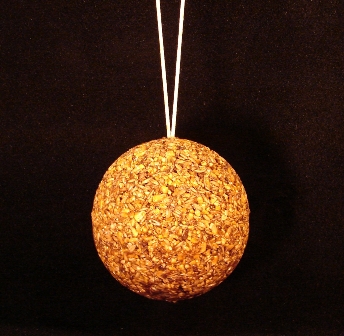
Today while picking up some feed (and admiring the huge collie in the aisle) I found THIS:


Yep-- and let me tell you, Uncle Jimmy's balls are BIG. About the size of a small cantelope. I love the very farmer-esque sense of humor. Of course, I just had to get one. We'll see if Annie likes licking them or not! You can buy 'em here, or wherever uncouth farmer stuff is sold.

Friday, January 20, 2012

Mustangs: Symbols of Freedom or Expensive Ferals?


Another round of BLM mustang adoptions started today! You can see a full gallery of available critters here.  As I've mentioned before, they have regular round-ups of mustangs in order to keep the population down. Of course, you can also adopt year-round at the BLM's permanent holding facilities.
 
The available animals are mostly young (ages 1-6) un-handled horses, but there are also mules, burros and green-broke mustangs. Males have all been gelded. The bidding starts at a meager $125 and includes free shipping to one of their adoption centers (locations include OR, CA, WY, NE, OK, MS, TX, KY, AR). You can buy up to four per year.

ZOMG so cute and fluffy!

Some people are less afraid of getting a wild horse than of the adoption process itself-- but it's really not that complicated:
  • fill out an online form stating you've got good enough facilities (no pics required)
  • send in a $125 deposit (credit cards accepted) that will be refunded if you don't buy
  • get a phone call from a BLM worker to review the paperwork
  • sign a contract stating the following:
"Yes, I will take adequate care of it, I will not turn around and sell it right away, and I understand the horse will still belong to the government for one year, just in case I am a total jerk and they have to seize it for reasons of incredibly obvious neglect."

That's it!

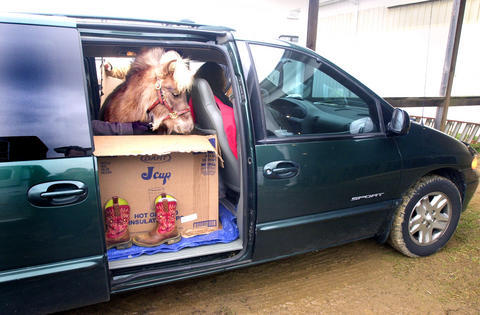
Oh, and you have to bring a halfway decent trailer to pick up the horse. They're not going to try to help you load a wild mustang in a dinky two-horse trailer from the 1970s. Or a mini-van.


Theoretically, there are government guys who go out and randomly inspect a few horses and farms per year to make sure everything is okay-- but I have never heard of this actually happening. There's just no way to enforce any of the regulations involving the adoption and care of mustangs. The laws are there, but not the money, manpower or interest. That's reassuring to people who dislike the big scary government intruding in their lives, and it's disappointing to those who would like to ensure that mustangs don't end up in bad situations.


I'm conflicted when it comes to mustangs. They're an important part of American history, and a proud symbol of our independence. I like the ideal of wild horses roaming picturesque landscapes-- but I also know that actually living in the wilderness means a life that is usually awful, brutal and short. Yeah, wild horses are free-- they're free to starve, die of disease and untreated injuries, or be hunted by wolves and cougars (and sometimes pissed-off cattle ranchers). About 40,000 wild equines aren't really "wild and free" any more anyway-- they're held at long-term holding facilities. (These facilities are either akin to equine concentration camps or horse heaven, depending upon the facility and whom you ask.) The government, and thus we the tax payers, fund the management of these horses to the tune of about $40 million per year -- or about $500 per year, per horse. Why are we paying that much money for these guys to freeze their ears off out west?

See, the BLM has to round up about 12,000 equines per year in order to keep their populations from expanding too far-- and they're usually only able to adopt out 1/3 to 1/4 that number. So the rest have to go... somewhere. Although the BLM denies it, some wild mustangs have even ended up at slaughter plants in the past. The law states that after 10 years of not being adopted, or three public auctions, mustangs can be gotten rid of in any expedient way possible. Combine that with the rather rough round-ups via helicopter, and people are screaming bloody murder. In fact, the BLM has gotten so defensive about people continually confronting them for poor management, cruelty, etc, that they have created a web page specifically to deny these accusations. Again, I'm on the fence here.


Yeah, this video is a bit rough, and I don't like it. However, remember that these are wild horses. Not bunny rabbits, not tame kids' ponies, but wild-freakin'-fightin' mustangs. Hundreds or thousands of them, in one place. How would YOU handle rounding them up? Also remember that some of the scrapes and limps you see here aren't necessarily due to the roundup. Again, these are wild horses. They live in the wild. You know, where bad stuff happens sometimes? Circle of life? Predators, dying young, being beaten up by herd members, etc?

I don't think the BLM is the real badguy here. They're in an impossible situation. With a limited budget, and limited manpower, they're supposed to manage tens of thousands of uncooperative wild horses every year-- and try to please everybody in the process. On one hand, there are hard-hearted bastards who don't like their tax dollars squandered on a bunch of shaggy ponies, and on the other hand, PETA-type people who demand that every animal on God's green earth be tucked into bed each evening with a story and a goodnight kiss.

In addition, "The BLM" is a pretty broad way to name the dozens of different offices, ranches and sub-contractors that make up "the management." If you want to blame someone, blame a holding facilities manager, not "The BLM" as an entire entity. Also, some of the mistreatment of mustangs stems from the fact that when a mustang is on Federal lands, it's protected-- but if it wanders onto state lands, it's treated about the same as a stray dog.

Some people advocate fazing out all mustangs permanently, through gradual chemical sterilization and larger roundups. I'd be okay with that. Basically, we Americans are keeping mustangs around for the sake of symbolism-- and the horses are suffering for it. If I let MY horse loose to run around without consistent sources of food, water, shelter and vet or farrier care, I would be prosecuted for neglect! In the NORMAL horse world, we tend to look down on people who keep dozens of wild, unbroke horses in their backyards-- we call them irresponsible breeders. Why are the standards different with mustangs?! Finally, if mustangs weren't out on the range in the first place, they would have to be subjected to brutal roundups!

Mustangs, by the way, aren't really a breed. They're feral horses, in the same category as stray cats. They come in all shapes and sizes. Their conformation usually isn't very good. Don't get me wrong, they can be great horses. But they're not magical. There's no real difference between the average mustang and the average backyard-bred grade horse. There's no special reason to keep them around, other than nostalgia. Speaking of which, NO, they are not native to North America...

Millions of years ago, North America was home to a species of primitive horse: Pliohippus.
This shaggy, donkey-like critter was about 12 hands high, stocky and heavy-boned. It died out about six million years ago. We're still not sure whether Pliohippus contributed to the genetic makeup of modern horses, but the closest equivalents alive today are north Asian Prezwalski's horses:


Are you looking at these guys? They're built for survival. Their small, compact, fuzzy bodies are designed to hoard maximum calories, on minimum forage. Now check out the modern mustang, descended from Spanish horses brought to North America in the 1500s:


This lanky, 15Hh, long-backed, European-descended mutt has to try to live in the same conditions-- with a body much less well-equipped to do so. They were bred by humans-- and as a result, they're built to serve humans more than they are to survive. When you're bigger, you have to eat more calories to keep going, and you have to burn more calories to stay warm. These guys are no more "native" to North America, or suited to living there, than a dalmatian is native to, or suitable for living in, a North American wolf pack. Is it possible? Sure. Is it going to be pleasant? Nope. Wild horses quite frequently freeze to death, and die of thirst and starvation. It's not that that stuff doesn't happen to the shaggy ponies in their native habitats; it's just that it happens to mustangs more often, because they are the wrong kind of critter in the wrong place.

If we MUST have feral horses out west, I'd like to see is something closer to a Busch Gardens approach, but government-supported. Yeah, let's keep some mustangs around-- but let's keep a lot fewer of them, in much nicer habitats, in a more accessible place for the public, and do so in a way that makes money rather than spends it in gobs. Wouldn't you go to a Wild Wild West theme park where you could see a rodeo, take a tour bus through wild mustang habitats, and ride The Gold Rush Roller Coaster? Hell yes. There would be a mini-museum dedicated to Cloud and his band. We could hire some of those Native Americans that are sitting out west with no jobs and bleak prospects. There would be Adult Nights, with honkey-tonk music, mechanical bull rides and half price beer. I'm thinking Calgary Stampede meets Disney Land here! The mustangs would live better lives, and the taxpayers would benefit.

Monday, January 16, 2012

Ice, Ice Baby


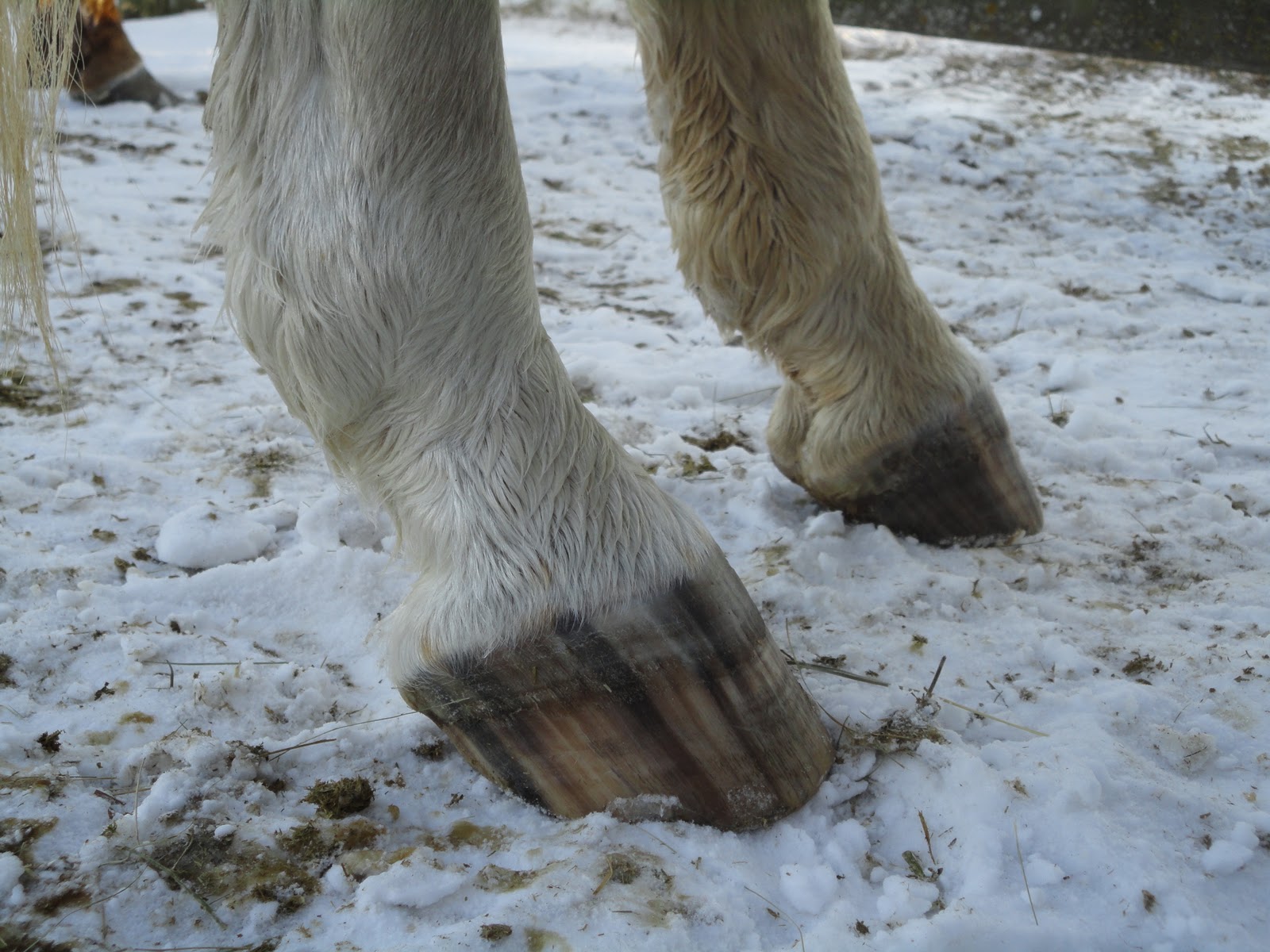
Snow + fetlocks = trouble. The melting snow sticks to the long hair of the fetlocks, forming icy balls that pinch and twist. I'm sure all that ice next to skin has got to be uncomfortable as well. Solution? Clip off the long hairs that attract the mess, then apply a little Vaseline. The Vaseline, an oil-based product, repels water and prevents the snow from sticking.


Ta-da! No more ice balls.
You don't have to use a clippers-- a plain old scissors will work fine. You're not looking for a clean shave, just to get rid of the shaggy stuff. Pro-tip: invest a couple of bucks in a pair of safety scissors. That way, you'll never have to worry about poking a horse with the pointy tips of regular scissors. This is especially invaluable if your horse doesn't like standing still. 


Saturday, January 14, 2012

The Annual Winter Horse Abandonment

Pro Tip: You may want to think about trading your poor horse for a snowmobile.

Every year this happens: irresponsible horse owners suddenly realize it's winter. Yes, this totally regular and predictable season apparently comes as a shock to them. They'd been scraping along, feeding too many horses on some scruffy pasture, and suddenly there's no grass. It's cooold, which means it's no fun to go out and handle horses. Ice and snow block trails and gates. The shoddy fences are breaking down under drifts of snow. They've maxed out their credit cards on Christmas presents and New Years booze, so they have no cash to buy hay. And all of the muddy ponds and five gallon buckets that served as water tanks are frozen over! OH NOES.

The only logical response to this: Is it doing without their own comforts in order to keep the horses fed, then planning better for next year? Finding lower-cost rough board and dealing with winter chores yourself? Trying to sell a few of those extra horses? Hell no! That would be too hard! 

Just dump all the horses on someone else.

What follows is the latest round of winter dump-offs in my area, brought to my attention by various email lists, horse boards, blogs, etc. All are unaltered, original messages. My comments are in green. Note: People do dump horses all year 'round. It just seems especially prevalent, and unfortunate, in the dead of winter.

---------------------------------------------

$300. horses:
A woman dropped off 26 horses at this persons place to board and then never paid anything past the first months board. The lady that currently has the horses went thru legal channels as the horses were abandoned and now has the court's approval to sell them.
They range in all sizes and breeds, mares and geldings. Asking $300 a piece to cover their feed bill.  There is a tall dark brown dressage horse, but not sure what level he is at.
If anyone is interested, please just give Robin a call, she is always available.  Last weekend she rode most of them to see how they are and said they are just nice riding horses. Didn't have any trouble with them.


Robin Schmidt
Eagle, WI
Email:
Cell#
Please pass around and you can call or email if interested


This has got to suck soooo bad. The legal wrangling alone must have taken months. Imagine being in Robin's shoes; you're stuck with 26 horses to try to sell, in mid-winter, when no one wants an extra mouth to feed. To ensure the financial survival of your own farm, you HAVE to sell them SOON-- but your conscience is going to bother you forever if you don't take the time to make sure they find GOOD homes, of which there is a short supply. What an awful position to be in.

UPDATE: Looks like this is a hoax, folks! Sorry. It seems as though Robin may have had a minor problem with a boarder, but certainly not to the point where she had to go to court, and 26 horses were not involved! Thank goodness. I have erased her contact info. I wonder how this stuff happens? Was it simply web-drama, where a situation was blown WAY out of proportion, or was it purposeful harassment by someone who cleverly arranged for Robin's phone to ring off the hook via this sympathy ploy?

------------------------------------------------------------------------------

Hello,
I appologize for such a large mass mailing but I am reaching out to my friends and colleagues who may be interested themselves or may have connections to someone who may be willing to help out my family. I am trying to put the word out to anyone who may be willing and able to add one or more horses to their family. My brother has several horses and is unable to properly care for them. He said if they are not able to find a new home for them asap, they will have to have them put down so they don’t suffer and starve. My brother, Terry, is a fireman and works very hard. He had an unfortunate accident in the Summer of 2010 where he indured a life threatening brain injury. He has made a miracalus recovery and is back to work, but his finances have suffered greatly. I’m sure he is probably feeding his horses before himself, but there is really nothing more he can do. I understand the economic times are hard all around and it is expensive to care for a horse, but if you or anyone you know has room to add one or more of these beautiful creatures you would be saving their life. I told Terry I would do what I can to get the word out. Here is a list of the horses he has.

3 yrs 50/50 Arabian, Checkner Male No Training
2-6yrs Arabian – Black Male Halter Broke
2-6yrs Arabian Male Halter Broke
14-15yrs Thouroughbred Female Trained
9m Saddlebred/Arabian Male Halter Broke
3-10yrs Arabian Female Broke

(HIS Sibling Not Mine- carol)My brother’s contact info:
His name is Terry Condon, cell phone number is 608-434-7508 and work number is 608-245-4561. He lives in Loganville (that's also in WI).

Okay, I do have some sympathy for anyone who is injured. However, this situation didn't develop overnight. Terry was injured in 2010 and has only now decided he can't care for his animals? Terry himself chose to collect THIRTEEN horses in the first place-- and 13 is about nine too many for one person to handle under the best of circumstances anyway. He chose to wait until his finances were really bad to do something about getting rid of those horses-- in the middle of winter, when no one wants a horse. He has apparently also chosen to keep such poor track of his horses that there aren't even reliable descriptions of them. Also, I'll eat my hat if the mares aren't pregnant by the "males." So he's chosen to create MORE horses to deal with! ARRRrrghhhh!
-------------------------------------------------------------------------------

From the Refuge Farms Horse Sanctuary boards:

In the Wausau area, a woman and her husband have been evicted effective 11/29/11. The Sheriff has visited and will seize her horses "sometime next week". She has no options. We have discussed euthanizing rather than shipping.
Her herd is 5 stallions and 5 mares. The mares, she says, are not pregnant as the stallions have been seperated from them. I will follow-up with her next week and offer to support some of the costs to euthanize.
If anyone has any ideas or any space or any names - please reach me. At least for a couple of them . . . .
How sad. How horribly sad.
The mares are 2 and 4 (both of these are halter broke) and three 20 year olds off the track. All are thoroughbreds.


Later, Refuge Farms got some more (worse) information:

I am having tough time with this one.

The owner is now thinking her horses are worth some money rather than just surrendering them. And I am finding it difficult to time my calls to her when she is able to talk with me. There seems to be an addiction involved here. The first call it was 10 horses. The next call it was 12 horses. The last call she couldn't recall how many horses. I'm thinking the mares are pregnant, too. Most likely. This woman is a breeder.
My calls to the sheriff so far have gone unanswered. I'll continue to try. The owner swears she has never received a business card from a deputy and that she has never received an eviction notice, either.


Again, I have some sympathy for those getting evicted, especially in this rough economy-- but also again, that situation did not happen overnight. You don't get evicted quickly. It takes months to get someone evicted. If this couple had financial problems and couldn't pay their rent for months, they had a responsibility to deal with the horse situation long before it required the intervention of the local sheriff and a horse rescue. They could at least have stopped breeding more horses. The fact that the woman is only now interested in getting some money out of the horses (because the rescue showed interest) is despicable. Lady, if you wanted to sell, you had time. Don't try to bilk the rescue out of money. The whole "eviction" thing could even be made up to try to get the rescue to hand over some cash or free hay.

Back to me again. There are more horses being dumped en mass out there (just browse Craigslist) but if I tried to list all of them, I'd just start punching things in rage. That's not a good idea around a computer. Anyway, if you can fit an extra horse into your life, please contact these folks. Keep the sarcasm and nastiness out of your conversations with them; it's okay to be snarky and commiserate on the internet in general, but it won't help the horses if you provoke their owners in person.

Friday, January 13, 2012

Model Horses: Insanity in Miniature


When I was a kid, one of my mother's friends bequeathed me her Breyer model horse collection. I ecstatically played with them in the backyard for years. They were like My Little Ponies, but grown-up!

Later, my brief stint in 4-H taught me that you could "show" them. Basically, it was playing dress-up with your Breyer, but with lots of homework involved. You could make some tack (or buy it if you were rich), dress your horse, then on a notecard, write what the horse was and why it was wearing this particular outfit. You got judged on how neatly you presented your stuff, how nice/realistic the tack and model were, and your knowledge of it all. "Paint horse with purple felt halter" got you minimal points, "trotting bay frame overo with real leather-and-silver western show halter, shown as in showmanship class" got you way more points. (Rules here)


As a kid, I thought it was kind of dumb; I wanted a real horse. This model horse showing seemed like a poor substitute. Until recently, I had no idea that it's a really big thing. It's not a poor substitute, it's a past-time bordering on a career. Like, on the level of some peoples' obsessions with scale model railroads. Adults spend thousands and thousands of dollars on showing model horses. The level of detail on some of them is incredible.

  • Serious competitors have a "stable name" and show names for each horse in their "show string." They collect only the rarest, best-quality models. (If you want to identify one of yours, try this guide for Breyers and this guide for Peter Stone models. If it's not one of those, well, good luck.)
  • There are special shows and show categories for horses made by different companies, re-painted and re-sculpted horses, etc. There are also "classes" for every kind of tacked or un-tacked model horse imagineable. 
  • You can make or buy realistic dolls to ride or show your horses. 
  • You can create or buy custom tack for every horse sport, with incredible detail. 
  • You can spend hundreds of hours (or dollars) making realistic scenery with which to display your models.
  • There are "live shows" where you physically travel to a location and set up your horses on a "show ring" (big table) and photo shows, where you can email pictures to an online show organizer. Of course, you have to pay an entry fee for shows, just like real horse shows.
Also, making "Breyer movies" is the craziness beyond all of this craziness. Children, teens and adults spend hours and hours filming model-horse-based soap-operas, some of them parts of long-running "shows." Kind of like all those sessions of make-believe you acted out as a child... except uploaded for the whole world to watch. Don't believe me? Just head on over to Youtube. Or better yet:


Wow, right? Who would have thought that there was an entire sub-sub-culture of horse enthusiasts. Kind of scary.

Oh, and just for fun: Best Costume Ever:

Monday, January 9, 2012

Sherlock Holmes & Icelandic Horses


I am a Sherlock Holmes nut. Sadly, however, my hero has rarely mixed his sleuthing with my other passion, horses (with the exception of frequent horse-drawn taxi rides, and the case "Silver Blaze"). Thus, I was delighted to find that the latest cinema twist on Holmes, "Sherlock Holmes: Game of Shadows," featured quirky Robert Downey Jr. riding a tiny Icelandic horse, after refusing to mount a full-sized equine. "They're dangerous on both ends and crafty in the middle," he declares. Very true.

The pony (ahem, sorry, small horse) he rides seems very small, even for an Icelandic; I suspect they used some camera or costuming trickery to heighten the comedic affect. Icelandic horses are usually around 13 hands tall; small, but not Shetland-pony-sized. They are, however, quite strong, so the idea of a full-sized adult riding one is entirely accurate. In fact, they're often preferred by adults because their smooth, super-speed trotting gait (called a tölt) is so comfortable. Apparently it's so smooth that you can ride at that pace whilst holding a full mug of beer and not spill a drop; but don't take my word for it, just watch this little educational clip:

Friday, January 6, 2012

My Little Pony!!!

Of course, I'm a HUGE fan of the new My Little Pony show. It's cleverly written, beautifully animated, and some of the songs are really great. It's such a good show, in fact, that its biggest fans are college-age males (and of course 20-30-female-somethings like me who grew up obsessed with MLP). In turn, that fan base is so rabidly excited about the new MLP, the internet memes they spawned have started showing up in mainstream media. If you haven't seen it, give it a try!


Of course, my favorite pony is Applejack, the down-home country girl with the can-do attitude. She's also a palomino, like Annie! Speaking of which, if you feel the compulsion to pony-ize your own equine, you can use General Zoi's Pony Creator and make all your dreams come true! This is Annie and Mr. Strut, My Little Pony style:


Her "cutie mark" (butt symbol) is a white rose, symbolizing innocence and happy love (and of course my last name). It wasn't possible to get her markings exactly correct, the settings wouldn't let me inflate her head to appropriate size, and I couldn't resist adding jewelry...but yeah, I think this is pretty accurate :)

This is Mr. Strut-- he's either grumpy, sad, or annoyed (it's always hard to tell). His symbol is the Confederate flag, appropriate for an old-school southern gentleman like himself...and possibly because he's a bit racist. I can totally see him yelling at people. Bad Mr. Strut. He's shorter than Annie, with more delicate ears. In real life, his mane and tail really do have streaks of silver.


 This is me as a pony. I think I've captured my uncoordinated enthusiasm well. I stuck to earthy colors; blue, green, yellow-brown-- but I made them a bit brighter. My cutie mark is the symbol for geocaching, and is also a symbolic representation of the initials for my alter-ego, The Green Traveler.


 ...and this is Mike! He's fairly hairless in real life, and always a snappy dresser. Also, he's a little sinister, way buff and has a great butt.

Horse Book & Movie Review: "War Horse"


"War Horse" is pretty much the quintessential animal movie. Boy falls in love with horse, dramatic events ensue, boy and horse are separated, both experience hardships, horse and boy reunite. Replace "horse" with "dog" and you have the plots for "Lad," "Shiloh," "Lassie," "Homeward Bound," etc.

The movie is based on a play, which was adapted from the book, which is based on a very few actual historical details, combined with the rather lackluster imagination of of Micheal Morpurgo, the author.


I'm pretty sure they did the play just to be able to use these totally awesome moving puppets.

Morpurgo was in a pub and got to talking with a World War I veteran about the horrors of using horses against tanks and trenches. Later, he founded a charitable organization where underprivileged city children could experience life on a farm for a few days, and was impressed by the way one little boy interacted with a farm horse. The resulting concoction, published in 1982, was "War Horse." It's not a bad story. It's just not a good one. The main character, Albert, is straight out of a Victorian morality tale; through hard work, determination, piety and respect for his parents, he manages to train a young colt (Joey), temporarily rescue the family farm, and later reclaim his lost horse. Albert's father is an appropriately pitiable character, ruined by drink, the mother is properly caring-yet-subservient, and the upper classes of English society are represented as noble, straight-laced chaps with stiff upper lips. The whole thing is presented in simple language, just right for a grade school student. It's narrated by Joey, the horse, in a too-human voice, and takes roughly an hour to read. I have no idea why Spielberg decided to make a movie of it, except perhaps that the stage play had already scripted most of the lines for him.

The movie does improve on the book in regards to characterization. Albert's father isn't just a drunk anymore; he's suffering from PTSD, admirably stubborn pride and the yolk of class-ism. That classism presents itself at home, in the form of an upper-class abusive landlord, and in the trenches, in the form of privileged and arrogant officers. Albert's mother isn't just submissive; she's loving despite, and in part because, of her family's faults. Albert himself is left mostly untouched; he's still pretty much a one-dimensional golden boy, apparently with no desires in the world other than to play with his horse, work his father's farm and serve his country. Oh, he does take a glance at a girl. Once.

Sadly, Joey loses his voice in this movie; other than some snorts and neighs, he's a silent character, not even getting a voice-over part. He also gets shoved into the role of "loyal dog," making him more relate-able to the public. He has a few horse moments, where he rears, spooks or bolts; my favorite is when Albert tries to jump him over a fence, and the totally untrained Joey simply stops abruptly, dumping his rider. In general, however, Joey acts like a well-trained Labrador. A scene that especially peeved me was his "training," where Albert simply talks him into going from barely halter broke, to coming when called, to being a fully trained plow horse in the space of a day or two.


Everyone knows that if you just nicely tell a horse what to do, it will listen, right? Right.


The movie is pretty realistic in regards to the war scenes. In the beginning, the British are typically convinced of their superiority, and send a big group of dashing, sword-wielding cavalry to attack some encamped Germans. Unfortunately, it's 1915, not 1815, and most armies have nifty things like machine guns. It's not much of a fight, and the horses suffer even more than their riders; after all, they're bigger targets. This is indeed historically accurate; both sides tried using horses at the start of the war, until they realized that tanks don't poop, and can do a lot more damage.


Things get even more grim as the movie progresses. Through Joey's journey across war-torn Europe, we see young boys executed for desertion, families robbed of food in order to feed troops, and the wholesale slaughter of men and animals. Battle devolves into a messy, awful trench warfare where horses are only used to haul guns and hospital wagons, and suffer from hunger, cold, artillery bombardments, mustard gas attacks and tank charges. In one scene, Joey bolts across No-Man's Land and rips through several sets of barbed wire barricades at full gallop, eventually entangling himself so badly, he can't move. In a sweetie-sweet scene meant to display man's love for animals, the goodness found in the heart of every soldier, and the ability of enemies to find common ground, blah blah blah, a German soldier and a British soldier work together to free Joey from the wires. They flip a coin, and the British are awarded the horse.

Then comes my favorite scene. The horse is taken to a field surgeon for treatment (though Joey is remarkably able to walk just fine, despite having been literally covered in barbed wire). This doctor-for-humans takes one look at a shallow cut on Joey's leg, in the dark and the snow, and pronounces: "It's tetanus! Shoot him. He'll die anyway." I nearly laughed. Of course, the general public can't be expected to know what tetanus is, or that it can't exactly be deduced from a glance at a cut, so I guess the scene worked for the majority of people. 


At this point, Albert is told that there's a "miraculous horse" in camp, and, although blinded from a gas attack, he immediately knows it's his horse. They're reunited, Albert convinces everyone not to shoot Joey, Joey is cured, and aside from a last-minute hitch wherein all cavalry horses are due to be sent to French butcher shops (a true historical detail) the movie ends happily from there. A few Dickensian twists leads Albert to meet one of Joey's temporary caretakers, regain his father's war trophy and honor the legacy of a dead little girl. Joey, of course, has a few tiny scars, but Albert is blessedly unwounded and able to see. They both go home, where the family farm is prospering and Albert's father finally connects with his son. Also, kittens frolic through rainbow-colored meadows.

Aside from the contrived plot and sentimentality, I think one of the biggest problems with this movie was lack of focus. It was nice to see the journey of both boy and horse, but touching on all the lives and locations came at a price; we never got to truly see much of horse or boy. With Albert's one-dimensional character and Joey's lack of lines, it's even harder to identify or empathize with either of them, much less decide who the lead character is. I didn't feel like cheering anyone on here. If I could have done that, I could have forgiven everything else.

Final verdict: Overly-sentimental, fairly inaccurate in regards to horses, lacking a true main character, still mostly watchable if you like animal stories. C+

P.S.   This was the quietest movie audience I have ever encountered in my life. Everyone who was not crying was sleeping, or trying to turn up their hearing aides.

P.P.S There's an interview with the top horse-trainer for the movie here, a time-line for WWI here, and you can watch a demonstration of one of the fully-articulated, life-sized, rideable horse puppets from the theater production here.

Thursday, January 5, 2012

Horse Training: Redneck Style


There are so many things wrong with this video, I almost had to get out a calculator to count them. This was posted by a friend on Facebook, who, even with his limited horse experience, was able to tell this was seriously stupid.

1. No helmet. On a very green horse. Aside from the ruination of this horse, this is my biggest pet peeve here. On the other hand, if this rider removed himself from the gene pool via massive head trauma, that wouldn't be so bad.

2. Inappropriately dressed "cowboy." Flat sneakers and shorts? Really? At least get a boot with a heel! It's like this guy wanted to get hurt.

3. Pulling on a horse to make it move. It seems logical, until you remember that a horse weighs a thousand pounds, and can lift you off of the ground with its neck alone. You can't out-pull a horse! What you can do is pull so hard on a horse's face that it gets pissed and rears away from the pressure-- just like this poor thing. My favorite part is when the "handler" on the ground leans on the rope so hard he's almost laying down-- it would have been perfect justice if the horse had chosen that moment to leap forward and squish him.

4. Totally inappropriate tack. First, of course, is the bit-- a long-shanked monstrosity designed to exert maximum leverage. In the wrong hands (these guys' hands) it's a jaw-breaker. Even in the right hands, you don't start a young horse in it! Next, that's not a real leadrope-- it looks more like a random, thin nylon rope from the back of a truck. No wonder it broke! And that saddle? Okay, I can excuse them for using a cheap one on an unbroke horse, if they're trying not to damage a good saddle on the first go-round; but at least make sure it fits the rider! It looks like the cantle is crawling up the guy's butt crack, and no one bothered to adjust the stirrups, so that even if he had gotten his feet in, he'd nearly be hugging his knees.

5. Yelling. Yeah, 'cause yelling loudly and angrily at a horse to is really going to want to make it move towards you!

6. Incredibly, awfully, terribly bad riding. Feet not in stirrups half the time, heels up, kicking and yanking back on the reins to make the horse move forward. This rider deserved to come off.

7. Wire fencing where you're breaking a horse to ride. Arghhh!!!! Smooth-wire pasture fencing itself isn't too bad; I use it myself. Wire fencing in an area where you know a horse is going to act up in a big way? Stupid! One of my biggest nightmares is losing control of a horse and having it run through a wire fence, there to get itself (and possibly me) tangled, lacerated or dragged. Note: people, do NOT try to make a "roundpen" out of wire and posts!!

8. Dangerous environment. Besides the issue with the fencing, I see a whole lot of forest that's going to A) spook the horse and B) be a potentially deadly hazard to a rider, if the horse becomes scared enough to start bolting through the brush. Oh, and did you glimpse the front of the ATV parked next to the fence? The cameraman is sitting on it. I bet the noise from that thing driving up really made this green horse feel calm!

9. This is a "maybe," but I'm betting I'm right-- this horse looks way too young to get broke. He's on the small side, and looks like he hasn't filled out yet-- like a two year old. If so, these idiots are doing him lasting harm physically as well as mentally. Of course, we could give them the benefit of the doubt and believe that it's just a small horse... but I wouldn't trust these guys to know how to use a bathroom without pissing themselves.

10. Too many players on the field. We've got Cowboy Idiot, Pulling Idiot, Spectator Idiot and Camera Idiot. All of 'em are making noise and making it more difficult for this green horse to chill out. If I had that many people around me while I was training a young horse, I'd tell them to back the hell off or prepare to get kicked in the face (by me, if not the horse). I especially liked it when Spectator Idiot stood in front of the horse next to Pulling Idiot. I wanted to tell that horse to leap forward "NOW!" and get two-for-one squishings. What a deal!